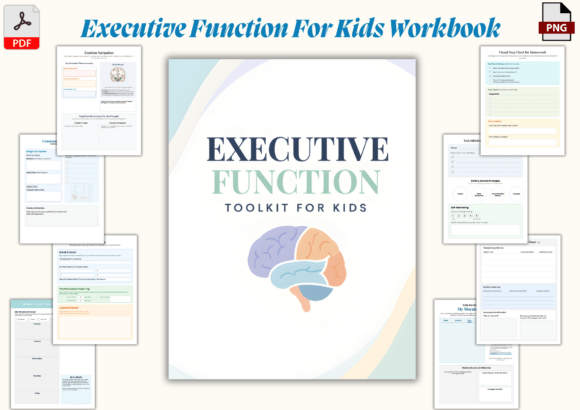
Executive Function Toolkit for Kids: A Practical Guide to Building Essential Skills
The Executive Function Toolkit for Kids is more than just a workbook—it's a comprehensive resource designed to help children develop critical life skills in a structured, engaging way. This beautifully crafted 8.5 x 11-inch educational tool features 18 pages filled with strategies, visuals, and activities that target focus, memory, emotional regulation, and more. Whether you're an educator, therapist, or parent, this toolkit offers a unique blend of creativity and functionality that supports learning and growth in a child's daily routine.
Understanding Executive Function Skills
Executive function skills are the cognitive processes that enable individuals to plan, organize, manage time, regulate emotions, and make decisions. These abilities are foundational for academic success, personal development, and future career readiness. For kids, developing these skills early can lead to better classroom performance, improved social interactions, and greater self-confidence.
The Executive Function Toolkit for Kids simplifies the complex world of executive functions by breaking them down into manageable, interactive activities. Each page is thoughtfully designed to encourage exploration, reflection, and practice—key components of effective skill-building.
Where Does It Fit in the Learning Process?
This toolkit is versatile and can be integrated at various stages of a child’s learning journey. Before starting a new project or task, it can serve as a preparatory tool to help children understand what they need to do, how to approach it, and what resources they might require. During the execution phase, it provides ongoing support through visual routines, habit trackers, and goal-setting exercises. Afterward, it helps reinforce learning with reflection worksheets and motivation sheets.
For educators and homeschooling parents, the toolkit can be used as part of a broader curriculum. It complements traditional teaching methods by offering hands-on, interactive ways to engage students. Therapists may use it as a supplemental resource in sessions focused on behavioral management or emotional regulation.
How to Use the Toolkit Effectively
One of the strengths of the Executive Function Toolkit for Kids is its adaptability. Here are some practical ways to incorporate it into daily routines:
- Time Management Planners: Help children visualize their day with color-coded schedules and to-do lists. This builds awareness of time and encourages responsibility.
- Focus-Building Exercises: Short, targeted activities like mindfulness prompts or concentration games can improve attention span and reduce distractions.
- Emotional Regulation Tools: Reflection worksheets and emotion charts teach kids to identify and manage their feelings in a healthy way.
- Memory Boosters: Visual aids and repetition exercises support long-term retention and recall of information.
- Growth Mindset Sheets: Encourage resilience and positive thinking by reinforcing the idea that effort leads to improvement.
These tools work best when used consistently. Incorporating them into daily routines helps children internalize the skills over time. Pairing the toolkit with other resources such as apps, digital planners, or physical calendars can enhance its effectiveness.
Integration with Other Resources
The Executive Function Toolkit for Kids is not meant to replace other tools but to complement them. It works well with digital platforms like Google Classroom, educational apps, and online learning systems. For instance, a child working on a science project can use the toolkit’s planning pages to outline steps, track progress, and reflect on outcomes.
When integrating the toolkit into a workflow, consider the following:
- Preparation: Choose the right pages based on the child’s age, interests, and current needs.
- Compatibility: Ensure the activities align with the child’s learning style and developmental stage.
- Usability: Keep the process simple and engaging to maintain interest and participation.
- Consistency: Use the toolkit regularly to build lasting habits and skills.
- Quality Control: Monitor progress and adjust the approach as needed to ensure effectiveness.
By combining the toolkit with other educational materials and real-world experiences, you create a well-rounded approach to skill development that supports both academic and personal growth.
Practical Implementation Tips
Implementing the Executive Function Toolkit for Kids effectively requires thoughtful planning and execution. Here are some tips to get started:
- Start Small: Introduce one or two activities at a time to avoid overwhelming the child.
- Create a Routine: Set aside specific times each day for using the toolkit to build consistency.
- Encourage Self-Reflection: Use the reflection worksheets to help the child evaluate their progress and set goals.
- Use Visuals: The clean layout and calming colors make it easy for children to follow along and stay engaged.
- Involve Others: Parents, teachers, or therapists can participate in activities to model behavior and provide guidance.
By making the toolkit a part of everyday life, children can develop a sense of ownership over their learning and growth. This fosters independence, confidence, and a lifelong love of learning.
Long-Term Benefits and Outcomes
The Executive Function Toolkit for Kids is more than just a short-term solution—it’s an investment in a child’s future. By building strong executive function skills early on, children are better equipped to handle challenges, make informed decisions, and achieve their goals.
Over time, consistent use of the toolkit can lead to improvements in:
- Planning and Organization: Children learn to break tasks into smaller steps and manage their time effectively.
- Focus and Attention: Regular practice with focus-building exercises enhances concentration and reduces distractions.
- Emotional Regulation: Emotional regulation tools help children manage stress, frustration, and other complex emotions.
- Self-Control and Responsibility: Habit trackers and goal-setting pages promote accountability and discipline.
- Confidence and Resilience: Growth mindset sheets encourage perseverance and a positive attitude toward learning.
These outcomes not only benefit the child in school but also in personal relationships, extracurricular activities, and future career opportunities.
Conclusion
The Executive Function Toolkit for Kids is a valuable resource that supports children in developing essential life skills. Its combination of practical activities, engaging visuals, and structured layouts makes it an ideal tool for educators, parents, and therapists. By integrating this toolkit into daily routines and workflows, you can help children build confidence, improve focus, and achieve long-term success.