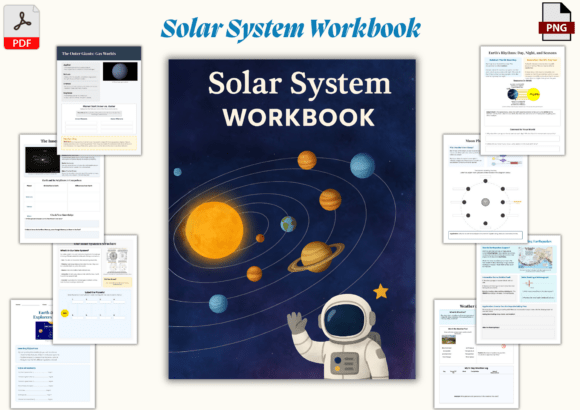
Embark on an Unforgettable Adventure Through Space with the Solar System Workbook
Imagine a world where learning about the cosmos is as exciting as exploring a new planet. The Solar System Workbook is designed to turn that dream into reality. This 19-page educational resource is perfect for young learners, offering an engaging and interactive way to explore the wonders of our solar system. Whether you're a teacher, homeschooling parent, or simply a curious learner, this workbook is your key to unlocking the mysteries of space in a fun and meaningful way.
Why the Solar System Workbook?
The Solar System Workbook is more than just a collection of facts—it's a gateway to scientific discovery. It combines interactive activities, diagrams, and creative exercises to help students grasp complex concepts like planetary motion, moon phases, and natural disasters in a way that's both accessible and enjoyable. By making science visual and hands-on, this workbook encourages critical thinking and problem-solving skills that are essential for young minds.
What Makes It Unique?
- Engaging Format: Each page is thoughtfully designed to keep learners interested and motivated.
- Interactive Learning: From drawing planets to solving space-themed puzzles, every activity is designed to foster curiosity and creativity.
- Comprehensive Coverage: The workbook covers everything from the Sun and its eight planets to Earth’s structure, weather systems, and even natural phenomena like volcanoes and earthquakes.
- Age-Appropriate: Tailored for grades 3–6, it's ideal for both classroom and at-home learning environments.
Discover the Wonders of the Sun
The journey begins with the heart of our solar system—the Sun. Learners will explore its role as the central star, its life cycle, and how it influences the planets around it. Through simple diagrams and easy-to-understand explanations, students will learn about solar energy, solar flares, and the importance of the Sun in sustaining life on Earth.
Explore the Eight Planets
Each of the eight planets is given a dedicated section, allowing students to compare and contrast their unique features. From the gas giant Jupiter to the rocky Mars, learners will discover what makes each planet special. Activities include identifying planetary characteristics, understanding orbital patterns, and even creating models of the solar system.
Uncover Earth’s Secrets
Earth is not just a planet—it's a dynamic world full of life and natural processes. Students will delve into topics such as Earth's layers, climate patterns, and the water cycle. Interactive exercises like drawing the Earth's structure or tracking weather changes will make these concepts come to life.
Learn About the Moon and Its Phases
The Moon has fascinated humans for centuries. In this section, students will learn about lunar phases, eclipses, and the Moon’s effect on tides. Simple experiments and diagram-based activities will help them understand how the Moon moves and how it interacts with Earth.
Understand Meteors, Comets, and Asteroids
Space isn't just about planets and stars—it's also home to fascinating objects like meteors, comets, and asteroids. This section introduces learners to these celestial bodies, explaining their origins, paths, and potential impacts on Earth. Diagrams and fun facts will spark interest and encourage further exploration.
Explore Natural Forces on Earth
From volcanoes to earthquakes, Earth is constantly shaped by powerful natural forces. Students will learn about plate tectonics, seismic activity, and volcanic eruptions through interactive activities and clear explanations. These lessons not only teach science but also highlight the importance of preparedness and environmental awareness.
Engage with Creative Science Activities
One of the standout features of the Solar System Workbook is its emphasis on creativity. Students will find themselves drawing constellations, building models, and solving space-themed riddles. These activities are designed to reinforce learning while keeping the process fun and stimulating.
Who Is the Solar System Workbook For?
This workbook is an excellent resource for teachers, homeschooling parents, and educators looking to make science more engaging for young learners. Its structured yet flexible format allows it to be used in classrooms, during after-school programs, or even as a supplement to traditional curricula. Additionally, it's a great tool for parents who want to inspire a love of science in their children at home.
Perfect for Grades 3–6
Designed specifically for students in grades 3–6, the Solar System Workbook aligns with common core standards and supports early science education. Its language is simple and clear, making it accessible for beginning readers while still challenging enough to promote deeper understanding.
How to Use the Solar System Workbook
- Start with the Basics: Begin by introducing the concept of the solar system and the Sun's role within it.
- Follow the Sections: Work through each section step by step, using the diagrams and activities to reinforce learning.
- Encourage Discussion: Ask questions to stimulate critical thinking and help students connect new information to what they already know.
- Review and Reflect: At the end of each section, review key points and encourage students to share what they've learned.
Specifications and Format
- Size: 8.5 x 11 inches
- Pages: 19 pages
- Format: Printable or digital version available
Conclusion: Spark a Lifelong Love for Science
The Solar System Workbook is more than just a learning tool—it's an invitation to explore the universe. By combining education with entertainment, it helps young learners develop a lasting appreciation for science and the wonders of space. Whether used in a classroom or at home, this workbook is a valuable resource that inspires curiosity, fosters creativity, and lays the foundation for future scientific discovery.
So why wait? Embark on an unforgettable adventure through space today with the Solar System Workbook and ignite your child's passion for learning!